Watch this to learn facts behind some common concerns about coronary artery bypass surgery.
Learn what you need to do in preparation for your heart surgery.
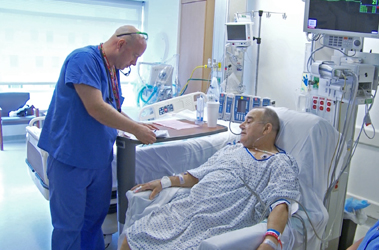
Become familiar with what you may experience on the day of your heart surgery.
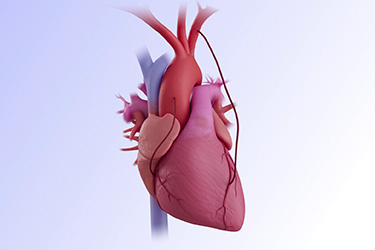
Coronary artery bypass surgery creates a path for blood to flow around a blockage and helps prevent a heart attack.
On the day of your bypass or valve surgery, a patient educator or a nurse may talk with you and your loved ones. You may be told what to expect.
Learn what to expect in intensive care following heart surgery.
When your heart surgery ends, your recovery journey begins. Let's see what you can expect for the next few days.
Watch these suggestions for supporting your loved one while he or she prepares for, and recovers from, heart surgery.
See what you can expect during your hospital recovery.
Learn strategies for rating and describing your pain level to members of your cardiac team, so they can treat it.
Understand how deep and controlled breathing exercises can help strengthen your lungs after surgery.
Learn how gradually increasing your level of activity can help your recovery.
When your surgery is done, you may be surprised at how quickly we get you up and moving. Why do we do this? Because it helps speed your recovery. Let's take a moment to learn about the benefits.
Understand the range of emotions commonly experienced after heart surgery.
Learn the common instructions included in your discharge plan.
You've had heart surgery, and it's time for you to leave the hospital. Let's learn about the process, and what you can expect.
How long you stay in the hospital after open-heart surgery depends on what type of surgery you had and your needs. It may be as short as 3 to 4 days. If you have complications, you may stay in the hospital several weeks or longer.
After surgery, you'll be moved to a recovery area where you can be closely watched. From there, you may go to a special care unit or a regular room. The hospital stay after minimally invasive heart surgery varies, but is often 5 to 7 days.
See how following the activity guidelines set by your doctor can help you gradually return your pre-surgery routines.
Learn how creating a daily basic routine can help you better manage your recovery.
Learn how to safely care and monitor your surgical incisions.
Watch this video to learn about the common medications you may take after heart surgery, and strategies for taking them as prescribed.
Watch this video to recognize the warning signs and symptoms after heart surgery that require a call to your doctor or emergency services.
Learn how you can expect to be feeling three to six weeks after heart surgery and how cardiac rehabilitation can help.
Learn how you and your loved ones can cope with the emotions commonly experienced after heart surgery.
Learn what heart-healthy lifestyle changes you should make to help reduce health problems in the future.
In this video, Kirk undergoes bypass surgery after learning he has widespread blockages in his coronary arteries.
In this video learn how Curtis prepared for life before and after heart transplant.
Watch this video to learn about what to expect during a coronary artery bypass graft procedure.
Watch this video to learn what to expect during a Minimally Invasive Coronary Artery Bypass Grafting procedure.
Watch this video to learn about what happens during Heart Valve Repair or Replacement.
Watch this video to learn about what happens during a minimally invasive heart valve repair or replacement.
Watch this video to learn about treatment options for coarctation of the aorta.
Watch this video to learn about what to expect during an Atrial Septal Defect Closure procedure.
This surgery is one way to treat blocked areas in the arteries of the heart. See how the surgery is done, and what to expect before and after.
This treats a blocked coronary artery in your heart. That's one of the arteries that supplies blood to your heart's tissue. With a bypass, blood will flow around the blockage so it can nourish this tissue.
This surgery fixes a hole called an "ASD." It's in the wall between the heart's two upper chambers. These chambers are called the "atria." The hole lets blood without oxygen mix with blood that has oxygen in it. This decreases the amount of oxygen pumped out to the body. We usually close an ASD early in childhood to avoid health problems later on.
This is a procedure to correct a narrowed aorta. That's the main vessel that carries blood from the heart to the body. In many cases, this surgery is done soon after a baby's birth.
This procedure fixes a hole called an "ASD." It's in the wall between the heart's two upper chambers. These chambers are called the "atria." The hole lets blood without oxygen mix with blood that has oxygen in it. This decreases the amount of oxygen pumped out to the body. We usually close an ASD early in childhood to avoid health problems later on.